Secondary trauma

The Weight of the Work

Secondary Trauma and Trauma-Informed Practice for Attorneys

For trial teams, criminal defense firms, and public defender and prosecutor offices: attorneys, investigators, paralegals, social workers and victim services staff.

Length
60-minute presentation, plus 15 minutes of questions
Format
Live, virtual or in person
Audience
Attorneys, social workers, investigators, paralegals and mitigation specialists, from those new to these ideas to those already familiar with them
Written materials
Slide deck, a one-page reset guide and a short reading list, sent in advance

Attorneys who handle abuse and catastrophic injury cases spend long hours with graphic evidence, survivor testimony and families in crisis. Criminal defense attorneys work under sustained pressure, with difficult evidence and clients in crisis. Over time, that exposure affects sleep, focus, patience and judgment. It’s called secondary or vicarious trauma, and training makes a real difference.

What the session covers

  • How trauma and acute stress show up in clients and witnesses, and how to respond in ways that build trust

  • Early signs of secondary trauma in yourself and your team

  • Quick tools to reset after difficult evidence, during a trial day and at the end of the day

Many attorneys tell me the hardest part of the day is the end of it, when a client’s story comes home with them. One of the tools I teach is a few minutes of private writing about the emotions of the day. It’s based on expressive-writing research, it takes five minutes, and people tend to keep doing it.

Dr. Karol Darsa, Psy.D.

Shaped for your office

  • For trial and plaintiff firms

    For teams who handle abuse and catastrophic injury cases and carry survivors’ and families’ stories for years before a verdict.

  • For criminal defense and public defender offices

    For attorneys, social workers, investigators, paralegals and mitigation specialists who work closely with people in crisis and carry responsibility for someone else’s freedom.

  • For prosecutors’ offices

    How trauma affects victims and witnesses, and what that means for interviews, testimony and trust. Early signs of secondary trauma in prosecutors, investigators and victim services staff. Live and virtual for all branches, and it can be recorded for new-deputy training.

The load in public defense

Public defense carries a particular kind of load. It comes in at least three forms:

  • Working closely with people in crisis.

    Staff in mental health diversion, CARE Court and conservatorship work spend their days with clients who have severe mental illness.

  • Responsibility for someone else’s freedom.

    A trial attorney may carry a case where the client faces 20 years. The weight of that responsibility stays with them.

  • Constant exposure.

    Case file after case file, regular visits to jails and prisons, and very few files that end well.

Caseloads are high, offices are understaffed, and there is little structured support. Law school does not teach people how to carry this. This session gives defenders language for what they are experiencing and tools they can use the same day.

Learning objectives

By the end of the session, participants will be able to:

  • Define trauma, and explain how it differs from everyday stress, burnout and secondary traumatic stress.

  • Recognize at least four early warning signs in themselves and colleagues, including changes in sleep, mood and alcohol or substance use.

  • Respond to their own reactions without judgment, including reactions that echo a person’s own history.

  • Use five practical regulation tools during and after difficult work.

  • Identify when and where to seek further help, including the State Bar’s Lawyer Assistance Program.

Session outline

60 minutes, plus 15 for questions

  1. 0–5

    Opening and a first reset

    How the session works: this is training, not therapy, and no one is asked to share anything personal. One short breathing practice together.

  2. 5–15

    What trauma is, and what the work does

    What makes an experience traumatic, including secondary exposure through case files and client stories. Trauma and stress compared. How repeated exposure affects sleep, mood, attention and judgment.

  3. 15–24

    Recognizing the signs without judgment

    Early warning signs in yourself and your team: numbness, irritability, intrusive images, rumination, dreading certain files. When a case stirs up something from your own past. Why every reaction to this work makes sense, and how judging our feelings makes them last longer.

  4. 24–29

    Coping that backfires

    Alcohol and other substances as a way to calm down after the day. Why talking through every detail can make things worse. When to get help, and where.

  5. 29–50

    Five tools, practiced live

    A breathing technique to slow the heart rate. Orienting to the room after hard material. Grounding before a client meeting or hearing. A low hum on the exhale to release tension. Five minutes of end-of-day writing so the case stays at work.

  6. 50–57

    Changing the culture

    Language that lowers judgment, such as “that case got to me.” What supervisors and colleagues can say after a hard verdict or a difficult visit.

  7. 57–60

    Personal plan

    Each participant chooses one tool for hard moments and one end-of-day practice.

  8. 60–75

    Questions

    Open Q&A.

Five tools, practiced live

  • A breathing technique

    To slow the heart rate.

  • Orienting

    To the room, after hard material.

  • Grounding

    Before a client meeting or hearing.

  • A low hum on the exhale

    To release tension.

  • End-of-day writing

    Five minutes, so the case stays at work.

How the session is run

This is training, not therapy, and no one is asked to share anything personal. Every exercise offers choices (eyes open or closed, practice or simply listen), and examples describe how cases affect people without graphic detail.

Support beyond the session

  • For offices.

    Short small-group sessions for a team after a hard trial or case.

  • For individuals.

    I lead Reconnect, an online practice with individual therapy and group programs, including intensive outpatient treatment for people who need more than weekly therapy.

Reconnect Center (opens in a new tab)

This is for your information. The session itself stays focused on education.

Questions

Is this therapy?

No. This is training, not therapy, and no one is asked to share anything personal.

Will the examples be graphic?

No. Examples describe how cases affect people without graphic detail, and every exercise offers choices: eyes open or closed, practice or simply listen.

Who is the session for?

Attorneys, social workers, investigators, paralegals and mitigation specialists, from those new to these ideas to those already familiar with them.

What do participants receive?

The slide deck, a one-page reset guide and a short reading list, sent in advance.

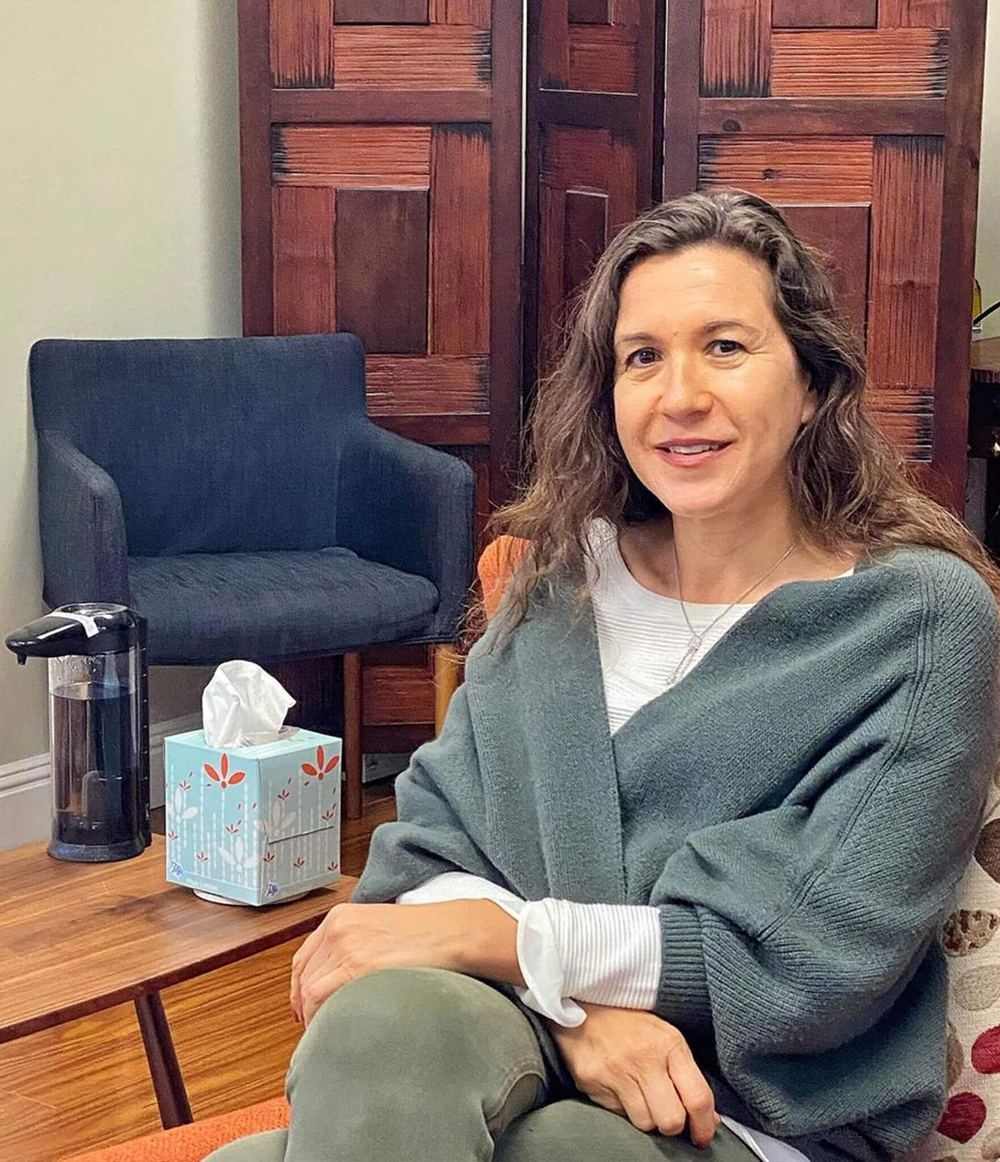
Dr. Karol Darsa, Psy.D., seated in her office

Presenter

Dr. Karol Darsa, Psy.D.

Dr. Karol Darsa, Psy.D., is a licensed psychologist in California (PSY19847) with 28 years of clinical experience. For 14 years she ran multi-site treatment programs with up to 50 staff, and she led her team through two wildfires that destroyed their buildings. Her clients have included attorneys, executives, physicians and law enforcement officers.

She is the author of The Trauma Map (2020) and The Trauma Bridge (2025), trains clinicians nationally through PESI, TPN Health and Nefesh International, and her work has been featured by Katie Couric, The Doctors, ABC and CBS. She teaches people in high-pressure work how to steady their own nervous system, quickly and discreetly.
Bring this program to your organization

Send a short note with your event date, audience and format (in person or virtual).

Book Dr. Darsa to speak

More programs

Performance under pressure

Steady Under Pressure

Under pressure, the nervous system reacts before the thinking brain catches up. Participants practice five tools they can use in real time, quietly and without anyone noticing, and leave with a daily plan.

See the program: Steady Under Pressure

Trauma-informed lawyering

Building a Trauma-Informed Practice

A program in three steps: a leadership consultation, Trauma 101, then deeper workshops. Each step is shaped by what we learn in the one before it, so the program fits the firm’s actual cases and culture.

See the program: Building a Trauma-Informed Practice