Teaching methods
Short instruction, guided practice of each tool, live polls and chat. No one is asked to share personal information.
Performance under pressure
Practical Tools for Clarity, Focus, and Presence in High-Stakes Legal Practice
I teach attorneys how to stay clear-headed under pressure: before a hearing, on a hostile call, in the middle of a deadline.
For attorneys and legal staff. Also taught for HR and wellbeing leaders, healthcare teams and leadership groups.
Under pressure, the nervous system reacts before the thinking brain catches up. Attention narrows, judgment gets rushed, and communication suffers, often in the moments that matter most: a hostile call, a deposition, a deadline that collides with three others.
This session explains how acute stress affects legal work and teaches five practical tools attorneys can use in real time, quietly and without anyone noticing. Participants practice each tool during the session and leave with a daily plan that lowers baseline stress and supports sustained competence.
By the end of this session, participants will be able to:
Explain how acute stress affects attention, judgment and communication in legal work.
Recognize early physical signs of stress overload in themselves and colleagues, before it affects client work.
Use five practical regulation tools in high-pressure moments: client calls, depositions, hearings and deadlines.
Build a short daily practice that lowers baseline stress and supports sustained performance.
60 minutes
0:00
A real pressure moment, and a 90-second reset the group does together.
0:06
The stress response, the accelerator and brake, and the performance curve.
0:16
The physiological sigh, orienting, the Up-Shift, grounding, and the Voo.
0:35
Early signs of overload, and three sentences that slow a conversation down.
0:39
Daily practices and a personal 1 + 1 + 1 plan.
0:46
Applying the tools to a live work moment.
0:50
Tools attorneys can use in real time, quietly and without anyone noticing. Participants practice each one during the session.
Two inhales through the nose, one long exhale. The long exhale slows the heart rate, and it can be used silently before a hard call or meeting.
Slowly looking around the room to signal safety and widen attention. For the moments when one problem has taken over.
A short standing or seated movement-and-breath sequence for the afternoon slump or flat energy.
Feet, chair, hands: a 30-second sequence for staying steady while listening to someone upset.
A low, vibrating exhale for discharging stress after a hard conversation.
Short instruction, guided practice of each tool, live polls and chat. No one is asked to share personal information.
A one-page reset guide for every participant, with all five tools, the daily practices and a personal plan.
The 60-minute program described on this page. Learning objectives, a timed agenda and written materials are provided for your CLE team. On request, I add a segment on warning signs of impairment and referral to the State Bar of California’s Lawyer Assistance Program.
Five Nervous-System Tools for Real-Time Workplace Wellbeing: a skill-building session with 55 minutes of instruction and practice and 5 minutes of questions. It adds a section on bringing the tools to the workplace: how wellness leaders can teach them to managers and teams, three sentences that steady a stressed colleague, a 90-second daily routine, and fitting the tools into existing programs. Each participant leaves with a personal 1 + 1 + 1 plan: one in-the-moment tool, one daily practice and one end-of-day transition.
The program can be adapted for healthcare teams and executive groups.
Research cited: Balban et al., Cell Reports Medicine, 2023. Seligman et al., American Psychologist, 2005. Yerkes and Dodson, 1908.
No. This is training, not therapy. No one is asked to share personal information.
Yes. It is taught live, virtually or in person, and it is interactive in both formats: short instruction, guided practice of each tool, live polls and chat.
A one-page reset guide with all five tools, the daily practices and a personal plan.
No. It was built for attorneys at all levels, and legal staff are welcome. A version for HR, wellbeing and people leaders adds a section on teaching the tools to managers and teams, and the program can be adapted for healthcare teams and executive groups.
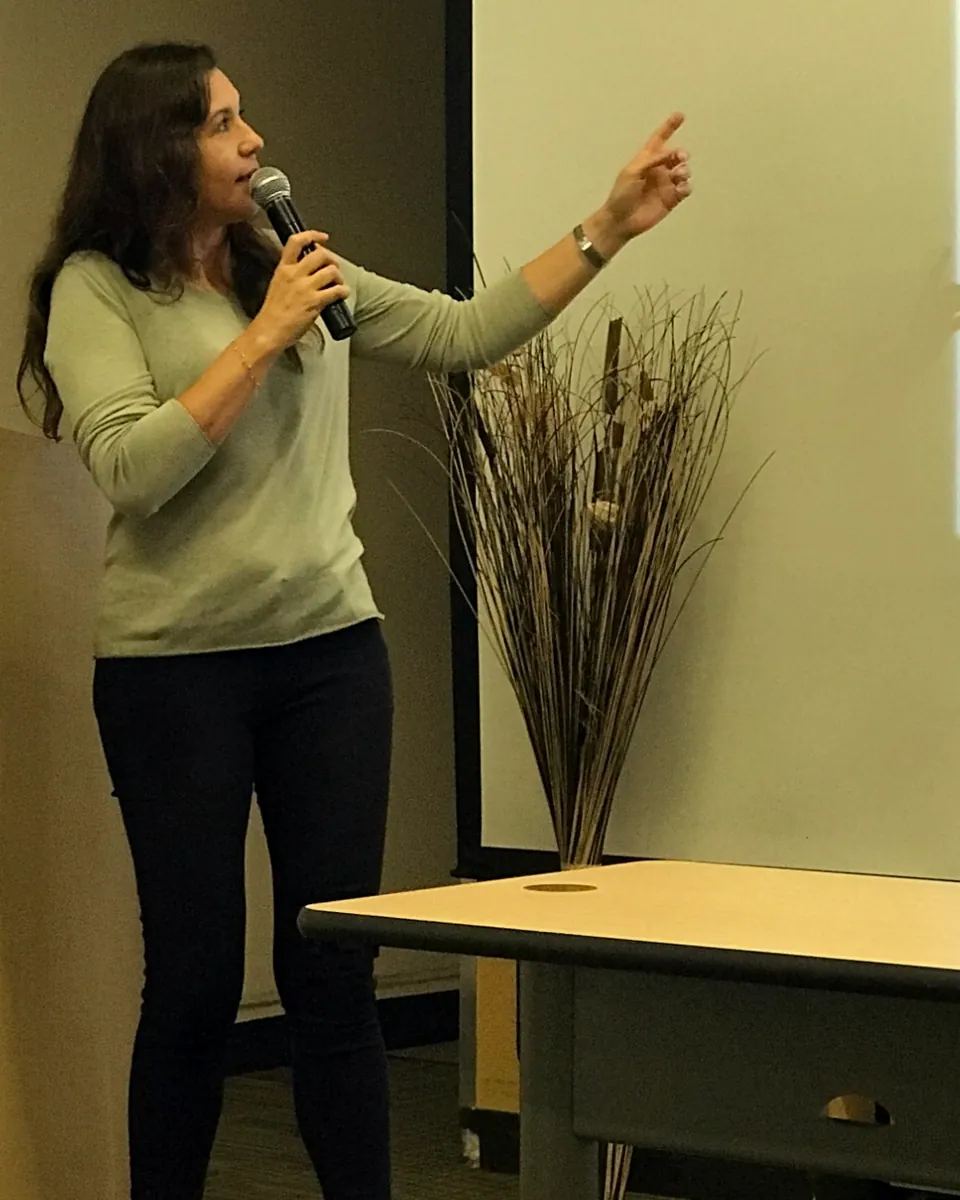
Presenter
Dr. Karol Darsa, Psy.D., is a licensed psychologist in California (PSY19847) with 28 years of clinical experience. For 14 years she ran multi-site treatment programs with up to 50 staff, and she led her team through two wildfires that destroyed their buildings. Her clients have included attorneys, executives, physicians and law enforcement officers.
She is the author of The Trauma Map (2020) and The Trauma Bridge (2025), trains clinicians nationally through PESI, TPN Health and Nefesh International, and her work has been featured by Katie Couric, The Doctors, ABC and CBS. She teaches people in high-pressure work how to steady their own nervous system, quickly and discreetly.
Send a short note with your event date, audience and format (in person or virtual).
Book Dr. Darsa to speakSecondary trauma
Long hours with graphic evidence, survivor testimony and clients in crisis affect sleep, focus, patience and judgment. It’s called secondary or vicarious trauma, and training makes a real difference.
Trauma-informed lawyering
A program in three steps: a leadership consultation, Trauma 101, then deeper workshops. Each step is shaped by what we learn in the one before it, so the program fits the firm’s actual cases and culture.
For law firms
Well-being CLE hours, secondary trauma training for trial teams, and trauma-informed practice programs, taught live for every office.
Training for law firms: Well-Being and Trauma Training for Law Firms